
11 Facts About Bahrain
Explore 11 amazing facts about Bahrain, including its modern marvels, traditions, precious gems, and island life in the Arabian Gulf, as well as its ancient Dilmun roots.
FACTS ABOUT
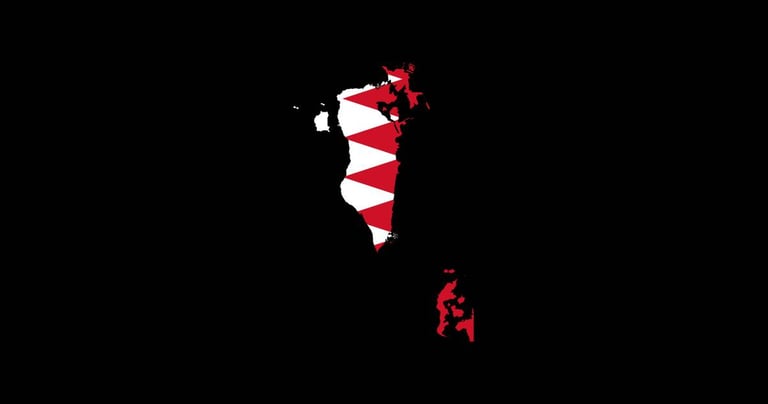
Bahrain Flag Map (credit: pixabay)
You are not by yourself if you have ever crossed over Bahrain on a map and considered, "That place is small, how much could there be to find out?" To be transparent, I continue to find that assumption somewhat annoying because I frequently assumed the same thing. Once you begin finding out about Bahrain, it is difficult to turn back. The country is packed with a huge variety of history, tradition, and discoveries into a little area. These Bahraini facts demonstrate that size is meaningless, from historical civilizations to nature wonders that challenge simple solutions. These 11 facts about Bahrain explain the reason this island nation always outperforms its peers.
Bahrain Name Means “Two Seas”: Bahrain's name means "Two Seas," a term that has generated controversy for ages. Some associate it with the nearby Gulf waters, while others associate it with the convergence of freshwater and saltwater. In any case, Bahrain's strong ties to the sea, a feature that dominates its history, are reflected in the name.
Bahrain Was Once Called Dilmun: Ancient Mesopotamian writings from more than 4,000 years back referred to Bahrain as Dilmun, a famous commerce center and a location connected to eternal life. Bahrain was one of the first hubs of international trade, with traders passing through its ports with copper, pearls, and tales.
Bahrain Has The Oldest Pearling Industry in The World: Bahrain prospered on pearls prior to oil changing the Gulf. Its pearling industry has been around for almost 4,000 years. Families relied on the sea for a long time, and Bahraini pearls were valued throughout empires. Pearl Heritage Trails continue to provide tourists with an insight into this hard way of life.
Guidance for tourists: If you enjoy cultural travel, schedule your vacation around a heritage festival, where old souqs, boats, and music bring history to life.
Bahrain is an Archipelago of Over 30 Islands: Bahrain is in fact an extensive network of more than 30 natural and reclaimed islands, despite the fact that majority of individuals think of it as a single mainland. While certain individuals feel nearly natural, others are crowded with metropolitan life. Weekend island hopping is a popular local getaway because of this variation.
Bahrain Was The First Gulf Country to Discover Oil: Bahrain was the first country in the Gulf to find oil in 1932. Its economy was modified by this finding, which also affected the future of the area. Bahrain's subsequent diversification, investing in tourism, finance, as well as culture instead of just oil, is remarkable.
Bahrain Has Freshwater Springs in The Sea: Although it may seem unbelievable, this fact is accurate. Pearl fisherman used to be able to drink fresh water while at sea since freshwater springs sprang up offshore. It is uncommon and a little unthinkable, similar to discovering a cold water tap in the middle of the ocean.
Bahrain is Home to a 400-Year-Old Tree With no Visible Water Source: There is a single tree in the middle of Bahrain's desert that has survived for four hundred years without any visible supply of water. Both scientists and tourists are still confused by the Tree of Life. Viewing it is similar to discovering a typo in the natural world that has never been fixed.
Bahrain Has no Permanent Rivers: Bahrain has no permanent rivers, regardless of its historical inhabitants. Springs and subterranean water sources allowed life to adjust. It serves as an example that resource management is continually more important to human survival than natural abundance.
Bahrain Was Among The First Regions to Adopt Christianity in The Gulf: Bahrain had Nestorian Christian communities prior to the rise of Islam throughout the region. Bahrain's varied religious history is further enhanced by the discovery of archaeological artifacts and old writings that attest to the existence of churches and monasteries on the islands.
Bahrain Has One of The Highest Population Densities in The Arab World: Bahrain is one of the most heavily populated countries in the Arab world due to its small geographical area and ever-growing population. Traditional neighbourhoods are able to maintain their position despite the rapid growth of urban development in this area; this is an outstanding and sometimes uncomfortably tight equilibrium.
Bahrain Qal’at al-Bahrain is a UNESCO World Heritage Site: For more than 4,000 years, Qal'at al-Bahrain, also known as the Bahrain Fort, was the capital of Dilmun. It is similar to turning the pages of a history book with each chapter piled on top of the previous one.
Summary: A Small Island With an Outsized Story
Bahrain's narrative is multi-layered rather than loud and boastful. In a present-day café situated next to a location that existed before the majority of civilizations, you can sense it in the variation between glass towers and historic remnants. Bahrain provides substance without pretence for tourists, history enthusiasts, or anybody interested in the Arabian Gulf. If there is a single thing to learn from the above Bahraini facts, it is that the nation does not have to scream to be exceptional. It just lives there, silently self-assured, allowing both its past and present to come out harmoniously. It is difficult to turn away immediately you realize that.
