
11 Facts About Barbados
Explore 11 incredible facts about Barbados, including its rich history, traditions, and Caribbean island lifestyle, as well as its coral island origins and rum heritage.
FACTS ABOUT
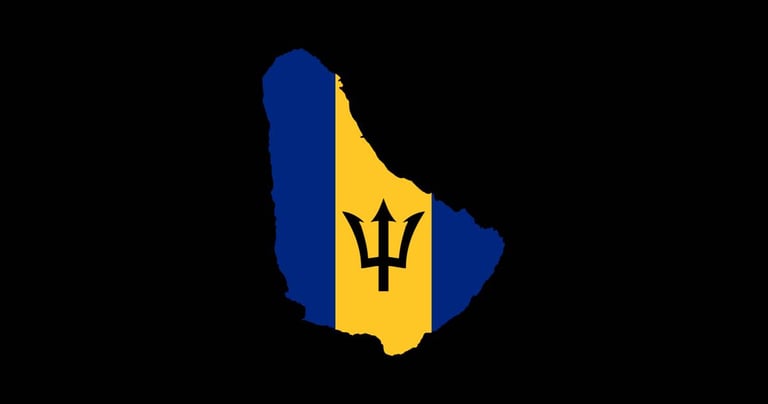
Barbados Flag Map (credit: pixabay)
The majority of individuals may picture volcanic islands with beautiful peaks whenever they envision the Caribbean. For this reason, first-time tourists are frequently surprised by Barbados. This island has a smooth, rolling terrain, crystal-clear waters, and subsurface streams that silently influence life above ground since it is totally composed of coral limestone, unlike other nearby islands. When I first read about it, I thought, "Wait, no volcanoes? How on earth does that operate?" It grew more and more remarkable as I explored further. Barbados is more than simply a gorgeous island; for many years, its geology, past, and culture have silently accomplished amazing achievements. These eleven facts about Barbados showcase its special appeal, rich history, and Caribbean way of life.
Barbados is The Only Caribbean Island Made Entirely of Coral Limestone: Barbados emerges from elevated coral and ocean sediments, in contrast to the majority of Caribbean islands that were created by volcanic activity. This is what offers the island its characteristic undulating hills and breathtaking cliffs, particularly along the east coast. Coral limestone is at work when you go down the coast and come across a naturally occurring sea cave or sparkling spring.
Barbados Has no Volcanoes & no Volcanic History: The absence of volcanoes and the lack of volcanic activity on the island in the past can be explained by this coral origin. Barbados seems kinder and more dependable than other islands with their high peaks and untouched landscapes, yet the periodic tropical storm serves as a reminder that it continues to be an essential component of the vibrant Caribbean ecosystem.
Barbados Was The First Caribbean Island Settled by The British: Barbados became the first British colony in the Caribbean when the English settled there permanently in 1627. The island's architecture, legal system, and a large portion of its cultural legacy, which combines African, British, and indigenous influences, were all influenced by this early colonization.
Barbados Remained Under British Rule Longer Than Any Other Caribbean Island: Barbados continued to be British from 1627 until gaining independence in 1966. It has had more impact than any other island in the area for 339 years. Everything from the island's love affair with cricket to the layout of its parliament reflects the historical influence.
Barbados Has One of The World’s Oldest Parliaments: Barbados is proud of its political past. Its Parliament is among the oldest continuously operating legislatures outside of the United Kingdom, having been established in 1639. It is simple to see generations of arguments, laws, and intense conversations bouncing through time as you pass the Parliament buildings in Bridgetown.
Barbados is Home to The World’s Oldest Known Rum Distillery: Since at least 1703, the Mount Gay Distillery has been making rum. Here, rum is more than simply a beverage, it is an integral element of the culture. Sampling a drink of Mount Gay rum is somewhat comparable to experiencing history itself, as both visitors and locals appreciate the rich history behind every bottle.
Barbados Has no Permanent Rivers: Barbados is remarkably lacking permanent rivers. Underground streams are fed by rainwater that swiftly flows through the permeable limestone. It serves as an example of how each element of daily life, including agriculture and water supply, is impacted by the island's coral foundation.
Barbados Relies on Underground Freshwater Aquifers: A great deal of the island's drinking water comes from subterranean aquifers, which naturally filter it via coral limestone. The locals have adjusted to this, which helps you understand how geology silently controls life here through means we do not often see.
Barbados Has One of The Oldest Jewish Synagogues in The Western Hemisphere: Barbados' long history of religious variety is demonstrated by the Nidhe Israel Synagogue, which was established in Bridgetown in 1654. As a historic testament of the Jewish community's persistence and sacrifices over the ages, the synagogue is still in operation presently.
Barbados Has a Traditional Movable House Called a Chattel House: One architectural innovation that is exclusive to Barbados is the chattel house. Due to historical land-tenure limitations, these little wooden dwellings were made to be mobile. They are now prized for their attractiveness and usefulness, a piece of history you can truly experience.
Barbados Has a Higher Density of Churches Than Many Larger Nations: Barbados is known for having more churches than days in a year, which is indicative of the island's strong religious ties. Every church, from massive colonial cathedrals to little local chapels, offers an account regarding community, history, and faith. It is an eye-catching sight.
Summary: Coral, Culture, & Timeless Charm
Barbados's beaches, rum, and festivals are simple to appreciate, however its true attraction is found in narratives hiding beneath its coral limestone hills, in its centuries-old parliament, and in houses built to relocate whenever needed. Geology, history, as well as culture all interact there in hidden ways that influence day-to-day existence. A trip to Barbados is more than simply soaking up in the sun; it is with regard to taking in the inventiveness needed to live on a coral island, sipping rum that has endured for generations, and strolling through neighbourhoods where history flows through the architecture. The island's uniqueness is enhanced by every detail, and unexpectedly it is more than simply a postcard, it is a dynamic story. Barbados offers an undoubtedly vibrant Caribbean lifestyle while demonstrating that even a small island is capable of maintaining generations of history, inventiveness, and resiliency.
