
11 Facts About Belarus
Explore 11 interesting facts about Belarus, including its massive woods, Soviet past, uncommon customs, and undiscovered treasures.
FACTS ABOUT
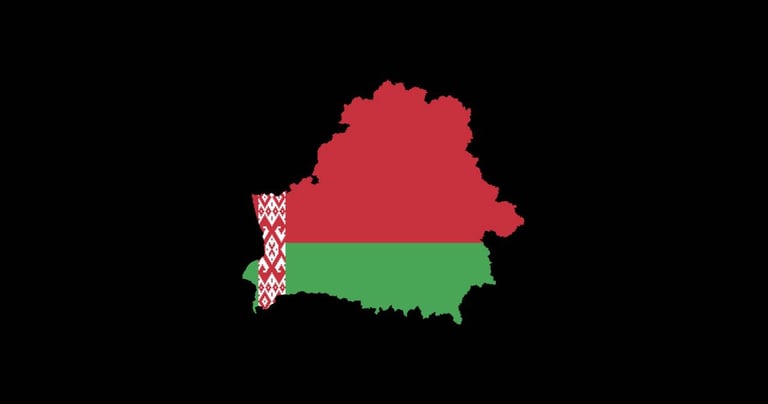
Belarus Flag Map (credit: pixabay)
Hardly does Belarus make it onto bucket lists. Unlike Paris or Rome, it does not call out for recognition. But it is the specific silent influence that makes it appealing. This Eastern European country, which is sandwiched between Poland, Lithuania, Latvia, Russia, and Ukraine, has a rich cultural heritage that is frequently overlooked. These 11 facts is going to offer you an entirely fresh viewpoint whether you have ever been interested in traveling to Belarus, learning regarding its history, or just wanting to have a greater awareness of this frequently overlooked nation.
Belarus Was Once One of Europe’s Largest Countries: The Grand Duchy of Lithuania, the greatest nation in Europe in the fifteenth century, included a sizable portion of the present-day Belarusian area. It extended far into Eastern Europe from the Baltic Sea. That is certainly a historical shift for a location that lots of individuals now find difficult to locate on a map.
Belarus Has Two Official Languages: Both Russian and Belarusian are recognized by Belarus officially. Russian predominates in day-to-day interactions, particularly in urban areas like Minsk. Dialogue, literature, and street signs can alternate between the two. This implies that while hearing Belarusian spoken seems similar to uncovering an undiscovered cultural layering, it is beneficial for tourists to get familiar with Russian terms.
Travel Guidance: Prior to travelling, download an offline translation application. Outside of tourist destinations, few people speak English.
Belarus Has Preserved One of Europe’s Last Primeval Forests: One of Europe's last primeval forests is the Białowieża Forest. It is similar to traveling back many, many years to go through it. The European bison, a species that was once in danger of going extinct, also lives there. This forest by itself makes Belarus worthwhile if you enjoy ecotourism or nature photography.
Belarus Was a Founding Member of The United Nations: The Byelorussian Soviet Socialist Republic became a founding member of the United Nations in 1945. In fact, Belarus had its own UN seat while being a part of the USSR at that moment. It is one of those geopolitical realities that causes you to reevaluate your preconceived notions with regard to post-war Europe.
Belarus Has no Access to The Sea: Poland, Lithuania, Latvia, Russia, and Ukraine encircle Belarus, which is entirely landlocked. Although you might think such would restrict its character, the nation instead develops a deep sense of self. A large portion of the terrain is shaped by lakes, rivers, and marshes.
Belarus is Home to Europe’s Largest Marshland: One of the biggest wetland areas in Europe is the Pripyat Marshes, which are situated in the Polesia region. Throughout history, these wetlands have served as organic obstacles in times of conflict. They are now hotspots for biodiversity. They are enticing to animals and birdwatchers. This area provides breathing room for those who get overwhelmed by congested tourist spots.
Belarus Retains Many Soviet-Era Features: Belarus still has a number of Soviet-era institutions and customs. For instance, the KGB continues to be the name of its security service. Minsk's architecture, with its wide avenues, majestic structures, and symmetry all around, recalls this legacy as well. While certain tourists perceive it interesting, others perceive it boring.
Belarus Was The First Country to Make Slavic-Language Printing Widespread: Francysk Skaryna published one of the earliest books written in an East Slavic language in 1517. This is significant for those who enjoy reading. Centuries back, Belarus contributed to the Slavic world's accessibility to printed books. It is similar to learning that a cultural movement was once ignited by a peaceful neighbour.
Belarus Was Historically Multi-Religious: Orthodox Christians, Catholics, Jews, and Protestants have all lived in Belarus for an extended period of time. Its holidays, architecture, as well as food were influenced by this range of cultures. Orthodox cathedrals, Catholic churches, and synagogues are all located close to one another. The country has richness that travel guides frequently miss because of its multifaceted nature.
Belarus Was Part of The Polish-Lithuanian Commonwealth: A large portion of Belarus was part of the Polish-Lithuanian Commonwealth for more than two centuries. From legal systems to aristocratic customs, this political union had a significant cultural impact. Knowing this era makes it easier to gain insight into the reason Belarus has historical connections to both Poland and Lithuania.
Belarus Capital Was Almost Completely Destroyed in WWII: Minsk was nearly wiped out throughout World War II. Following that, it was restored using magnificent Soviet architecture. Nowadays, exploring around the city is similar to exploring through a masterfully recreated remembrance. Following destruction, resiliency is demonstrated by expansive boulevards and majestic structures.
Effective Guidance if You Are Interested in Traveling to Belarus
Listed below are some recommendations if the facts above caught your curiosity:
The ideal moment to go: The weather is nice for touring cities and forests from late spring to early autumn.
Cultural understanding: Gaining knowledge of Soviet heritage helps to improve the way you interact.
Nature enthusiasts: Give the Pripyat Marshes and Błowieża Forest top priority.
History fans: Visit Minsk's monuments and museums.
Traveling to Belarus acknowledges inquiry and endurance. It is not overpowering, and that is exactly what makes it appealing.
Summary: A Quiet Giant of Europe’s Hidden History
Belarus does not make a big effort to promote itself. It is not dependent on flashy branding or postcard clichés. Rather, it represents centuries of complicated heritage, ranging from the Polish-Lithuanian Commonwealth and medieval empires to Soviet restoration and present day invention. Understanding with regard to Belarus might be likened to picking up a book that had been sitting gently on the shelf while more dramatic narratives caught the interest of individuals. And it is difficult to quit immediately you begin flipping through the pages. The above 11 facts show that Belarus is much more interesting and fascinating than plenty of individuals realize, whether you are studying its past, making travel plans, or just broadening your knowledge of Eastern Europe.
