
11 Facts About Belgium
Explore 11 amazing facts about Belgium, including its unusual significance in Europe, and medieval cities.
FACTS ABOUT
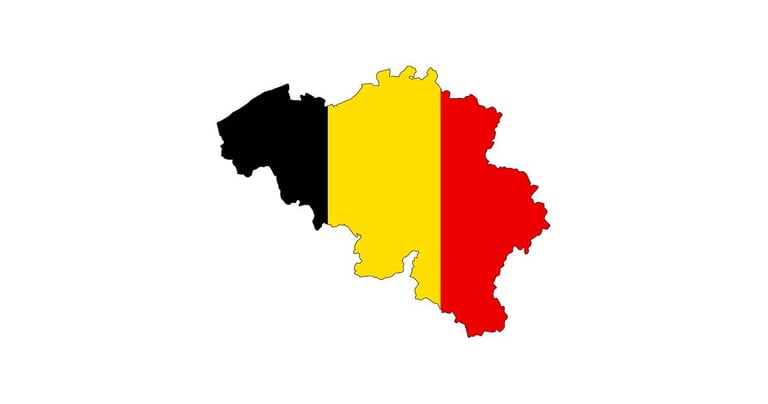
Belgium Flag Map (credit: pixabay)
Belgium is one of those nations that individuals believe they know until they get there. Admittedly, I confined it to waffles, chocolate, and the European Union headquarters for a long time. Then I began to peel back the layers, and all of unexpectedly this little country seemed similar to a medieval postcard, a political puzzle, and a history book together. These 11 facts will provide you with an entirely new viewpoint if you are thinking about visiting Belgium, studying European history, or are simply interested in this remarkable region of Western Europe.
Belgium Was The Second Country in The World to Industrialize: In the early 19th century, Belgium became the second industrialized nation in the world, behind the United Kingdom. Belgium quickly became a European economic superpower thanks to its coal, steel, and railroads. That is extraordinary for a country that is so small. Cities like Liège and Charleroi show how early industries changed the European continent if you are interested in learning more about the continent's industrial past.
Travel Guidance: To have a better knowledge of Belgium's economic origins, visit historic industrial facilities that have been converted into museums and cultural venues.
Belgium Has Three Official Languages: German, French, and Dutch are the official languages of Belgium. The predominant language in Flanders, the northern region, is Dutch. French is the primary language in Wallonia, the southern area. German is spoken by a small eastern group. In the beginning, it may seem complicated because traffic signs change their language and even government services vary by area. However, Belgium's multifaceted character and rich cultural legacy are reflected in that variety of languages.
Useful Guidance: Prior to going, learn some commonly used words in Dutch and French. A simple "merci" or "dank je" can make a big difference.
Belgium Has One of The World’s Most Complex Political Systems: The political structure of Belgium is renowned for its complexity. Language and territory determine how authority is distributed among the federal, regional, and local governments. It might be similar to putting together furniture without directions when you attempt to figure it out. However, this framework assists in balancing language and cultural imbalances. Belgium is an excellent case study in compromise for anybody passionate about European politics or federal governance.
Belgium Once Went 541 Days Without an Elected Federal Government: Belgium set a world record in 2010 and 2011 by going 541 days without establishing an elected federal government. And life went on. Trains moved. Schools reopened. Chocolate businesses continued to be lively. Global interest in how stable systems may continue to operate in the face of political standstill gained momentum throughout that time.
Belgium Was Ruled by Spain & Austria Before Becoming Independent: Belgium was governed by Spain (as part of the Spanish Netherlands) and then Austria (Austrian Netherlands) prior to attaining independence in 1830. Belgian art, architecture, and religious customs were influenced by these factors. Evidence of Habsburg and Spanish ancestry can be seen woven throughout the medieval streets of places like Bruges and Ghent.
Belgium Was Created as Neutral Buffer State: The map was redrawn by European nations following Napoleon Bonaparte's loss. In order to maintain stability in the area between the greatest nations, Belgium became a neutral buffer state in 1830–1831. Afterwards, same neutrality proved crucial to European diplomacy, and surprisingly, Britain's admission into World War I was caused by its violation. Belgium's tactical origin is the direct cause of its unique prominence in Europe.
Belgium Has More Castles Per Square Kilometer Than Almost Any Other Country: Thousands of castles and fortified estates can be found all over Belgium. Some sit peacefully in the countryside, shrouded in ivy and mystery, while others are magnificent and renovated. Belgium is an ideal destination for anyone who enjoy photography or history. You may discover undiscovered architectural treasures if you rent a car and venture outside of Brussels.
Belgium Was The Site of The Battle of Waterloo: Just south of Brussels, close to Waterloo, was the site of the pivotal battle in 1815 that put an end to Napoleon's reign. For many years, the Battle of Waterloo changed the political landscape of Europe. You are able to observe the fields where history turned presently when you stand atop the Lion's Mound. It is somewhat surprising and humbling.
Belgium Was Home to One of History’s Most Brutal Colonial Regimes: In the late 19th century, the Congo Free State was under the direct rule of King Leopold II. Many Congolese perished under his regime as a result of cruel abuse and enslavement. One of Europe's most distressing legacy of colonialism is still this chapter. Belgium today is still facing and reevaluating that past. Explore beyond the magnificent palaces and visit museums that genuinely discuss this history if you are in Brussels.
Belgium Produces Over 1,500 Types of Beer: More than 1,500 types of beer, including well-known Trappist brews produced in monasteries, are produced in Belgium. Belgian beer culture takes its dubbels and fruity lambics very seriously.
If you are visiting:For tradition, try a Trappist ale.
Serve local cheese with beer.
Every beer has its own glass, and it is important to inquire from servers for suggestions.
Belgium Has The World’s Longest Tram Line: The Belgian Coast Tram is the world's longest tram line, running roughly 67 kilometers along the North Sea coast. It links De Panne and Knokke-Heist, two coastal towns. Getting on and off this tram is a straightforward method to see Belgium's coastline without hiring a car if you are visiting in the summer.
Summary: Small Country, Monumental Impact
Despite its tiny size on the map, Belgium has had a significant impact on European politics, history, industry, and culture. While organizing adventures throughout Europe, many individuals ignore it. Even experienced tourists are surprised by Belgium's magnitude, which includes castle-dotted landscapes, complicated government, medieval cities, and a distinctive beer culture. Give Belgium the consideration it requires whether you are organizing a trip to Europe, studying Belgian history, or just browsing for unusual places to visit in Europe. Go outside of Brussels. Speak with the locals. Discover Wallonia and Flanders. You are going to leave with more than photos—you are going to leave with perspective. Perhaps, similar to myself, you will question the reason it took you a while to recognize this extraordinary nation in the center of Europe.
