
11 Facts About Deer
Explore what makes these forest legends so amazing by learning 11 spectacular facts about deer, from their beautiful behaviours to their unexpected capacities for survival.
FACTS ABOUT
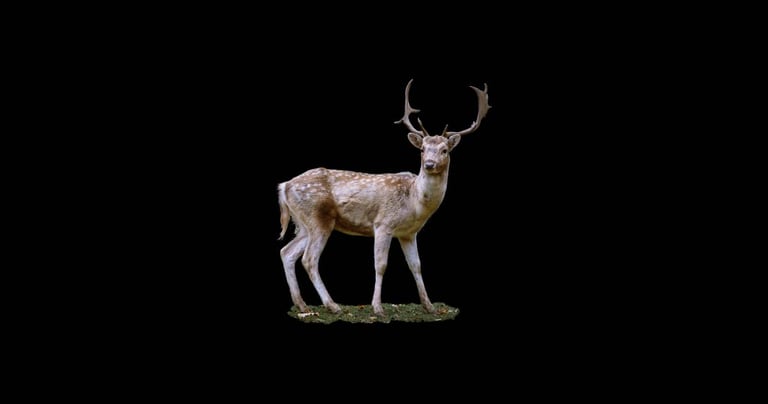
Deer (credit: pixabay)
Each moment that I see a deer jumping between the shadows of trees, I am filled with the same tiny sense of wonder. Perhaps you have experienced the same thing, those times when a deer suddenly shows up, remains motionless, and looks back at you as if you were the intruder. I have consistently made an effort to understand regarding them, partially due to the fact that find them fascinating and in another given that I keep coming across false "facts" on the internet. Sorting through the excessive disruptions can be annoying, particularly if you are looking for something trustworthy but simple to understand. Therefore, this piece compiles eleven interesting facts about deer and explains them in an approach that is straightforward, naturally occurring, and unexpectedly applicable. The following information will change the way you view deer, whether you are a wildlife enthusiast, an occasional nature walker, or an individual who just likes uncovering something interesting to share afterwards. They might additionally assist you notice specifics on your following woodland adventure. Allow us to get right to the worthwhile part because lists are much simpler to scan and distribute.
Deer Have Rectangular Pupils: This is the solution if you have ever questioned how deer see you prior to you seeing them. They have an amazing, virtually panoramic 310-degree field of vision thanks to their horizontally expanded pupils. They resemble built-in rearview mirrors, which are ideal for dodging attackers and, to be honest, annoying for anybody trying to grab a picture.
Deer Can See Ultraviolet Light: Because deer eyes do not have the same UV filter as human eyes, they can see UV reflections. Fresh vegetation, snow, as well as some textiles appear brighter to them. This additionally clarifies the reason why hunters are obsessed with UV-neutral wash and scent blockers, deer are able to see visual details that humans are unable to.
Deer Regrow Antlers Faster Than Almost Any Mammal Regrows Tissue: The fact that deer antlers are capable of growing up to an inch every day remains an amazement to me. Each and every day. In animals, it is one of the quickest tissue-regrowth processes. If you have ever seen a time-lapse of an antler's growth, it is almost like witnessing a plant emerge.
Deer Chew Cud Like Cattle: These elegant creatures feed similarly to cows and have a four-chambered stomach. They frequently pause, calm down, and chew silently for extended periods of time because of this. They are able to digest difficult vegetation that other animals are unlikely to bother with thanks to all that chewing.
Deer Can Swim Extremely Well: The following time you come across a deer near a lake, disregard the notion that it is stuck because many species can swim several kilometers and use water to avoid dangers. I was shocked the first time I watched a deer cross a huge river as though it was nothing.
Deer Change Coat Colours Seasonally: In the winter, deer have darker coats; in the summer, they have lighter coats. While the brighter colour provides excellent protection in grasslands that receive sunlight, the deeper shade absorbs greater temperatures in the winter. In essence, it is nature's way of changing out clothing without having to deal with the chaos of closet cleanup.
Deer Have Specialized “Split” Hooves: More than simply a characteristic of deer, those well-known cloven hooves serve as adaptable mechanisms that enable them to run, climb, and maintain balance on crumbly or rough terrain. Consider them as evolution's all-terrain footwear.
Deer Often Eat Small Birds’ Eggs & Nestlings: Despite being herbivores, deer will not turn down protein-rich foods such tiny bird eggs or nestlings if they are available. Surviving often forces living things to adopt surprising behaviours, which may seem surprising at first.
Deer Can Jump up to 10 Feet High: You certainly know that fences are not always effective if you have ever attempted to keep deer out of a garden. They can easily cross 10-foot barriers because of their strong hind legs. For gardening enthusiasts, it is both fascinating and a little annoying.
Deer Produce Scent From Unique Glands: By means of unique glands called the preorbital, tarsal, and metatarsal, deer transmit chemical information. These fragrances express a variety of details, including personal identity, emotional state, and geography. In essence, it is a spam-free natural messaging system.
Deer Can Run up to 40 mph Depending on Species: White-tailed deer have a sprinting speed of about 40 mph, which is comparable to that of a racehorse. You may experience speed in your chest if you have ever seen someone sprint across a wide open space.
The Significance of The Above Facts
Knowing how deer behave can enhance the nature experience, whether you are interested in hiking, wildlife photography, or just uncovering new things. You are going to see more trends, recognize them sooner, and recognize how survival-oriented they are. Sharing the above facts can also ignite your children's or learner's genuine interest if they are animal lovers. The above facts also provide useful information for anybody attempting to safeguard their garden or possessions, such as how high deer are capable of jump, how well they see, and why some discouragements are more effective than others.
Summary: Wild Wonders Revealed
As I get more knowledge with regard to deer, I find myself walking more slowly in case one shows up. These creatures are more than simply gorgeous figures on a landscape; they are multifaceted, versatile, and packed with of discoveries. Whenever we take the time to pay attention more closely, deer demonstrate to us how amazing the forest can be, whether it is through their UV vision, flying leaps, or that nearly magical antler development. The hope is that this piece was a breeze of fresh air for you if you have ever been irritated by repeated or superficial wildlife information on the internet. It is straightforward, informative, and worthwhile to share with an individual who shares your passion for the natural world.
