
11 Facts About Snakes
Explore 11 amazing facts about snakes, including their astonishing skills, distinctive adaptations, and hidden tendencies that make these reptiles exceptional.
FACTS ABOUT
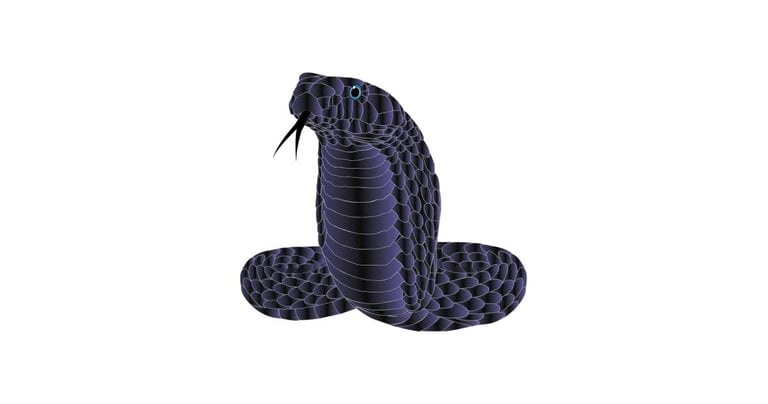
Snake (credit: pixabay)
I am going to confess something uncomfortable: I was afraid of snakes for years. A while back, when I saw a small grass snake, basically the reptilian equivalent of a noodle, I panicked. However, as I gained more knowledge, that anxiety gradually gave way to interest and, ultimately, sincere gratitude. Not only are snakes enigmatic, but they also possess unique, somewhat unthinkable characteristics that seem like they belong in a science fiction novel. The following compilation explains the unusual features, adaptations, and undiscovered abilities that make snakes such a memorable group of reptiles if you have ever questioned what makes them so fascinating.
Snakes Have No Eyelids: Regardless of whether they desired to, snakes are unable to blink. They use a transparent scale known as a spectacle to shield their eyes in place of eyelids. Envision wearing transparent contact lenses all the time. Although it seems awkward, it serves as the ideal built-in shield for snakes.
Snakes Smell With Their Tongues: There is more to that fiery tongue aside from tragedy. Snakes use it to gather microscopic airborne particles, which they subsequently "read" using the Jacobson's organ, an organ located in the roof of their mouth. If you have ever attempted to identify the source of a scent, you undoubtedly wish you had this ability.
Snakes Can Have Over 400 Vertebrae: Their extraordinarily adaptable spine, which has hundreds of vertebrae, much more than other mammals, is the source of their well-known crawling motion. It is similar to possessing the flexibility of several yoga instructors placed one after the other. It makes sense why they move so smoothly.
Snakes Hear Through Their Jawbones: There are no external ears on snakes. Rather, they use their skull and jawbones to detect vibrations in the ground. They therefore "hear" footsteps more clearly than sound from the air. You are now familiar with why it hardly happens if you have ever attempted to sneak up on one.
Snakes Can Digest Bone: Snakes digest their meal all the way down to the bone. Teeth and pieces of bone can be dissolved by their stomach acids. This may seem a bit harsh for anybody who has had trouble digesting a large meal.
Snakes Breathe While Swallowing Prey: You might that a snake's airway would be blocked by eating anything the size of a tiny animal, yet they have an ingenious solution around this. In order to continue breathing during a meal, they extend their trachea forward similar to a snorkel. It is the equivalent of staying afloat for reptiles.
Snakes Shed Their Skin in One Piece: Ecdysis is the process by which snakes shed their skin on a continuous basis. Typically, the old layer peels off similar to a tube that has been turned inside out. It feels strangely pleasant, comparable to removing a sticker that is flawlessly perfect and free of tears.
Snakes Have a Right-Side Lung Dominance: There is not much space for two full-sized lungs in their long, narrow bodies. The left lung is either diminished or nonexistent throughout the majority species, which primarily depends on the right lung. It is a natural adaptation that preserves space without compromising survival.
Snakes Can Slow Their Metabolism By 70%: By significantly reducing their metabolic rate, certain snakes are able to go months without eating. If you have ever considered the possibility of surviving all day on a single snack, snakes take that notion to a whole new dimension.
Snakes Can Reproduce Without Males: In some animals, a female can create offspring without fertilization through a process known as parthenogenesis. Although it is uncommon, it does occur; it is one of those things that seems unthinkable until you see the evidence.
Snakes Do Not Chew: They do not chew at all, however their backward-curving teeth tightly grasp their prey. Their eating process is both interesting and terrifying because everything goes down entire.
The Significance of The Above Facts
Finding out regarding snakes can be similar to solving a puzzle; at the moment you believe you understand them, you discover another interesting characteristic. Understanding how snakes work makes them seem less like horror stuff and more like wonders of creation, whether you have been attempting to get over your phobia of them or just want to learn more about them.
Summary: A Fresh Look at Remarkable Reptiles
Although they may appear frightening in the beginning, snakes are actually interesting until you understand how amazing their biochemistry is. Each detail, from breathing while ingesting prey to feeling vibrations through their jaws, paints a beautiful and surprising representation of these creatures designed for survival. If you have ever experienced anxiety being close to snakes, being aware of the above facts may help you gradually replace your phobia with amazement, similarly to how it did for me.
