
11 Facts About Tectonic Plates
Explore how tectonic plates transform the Earth's surface, cause earthquakes, and form mountains by reading these 11 amazing facts.
FACTS ABOUT
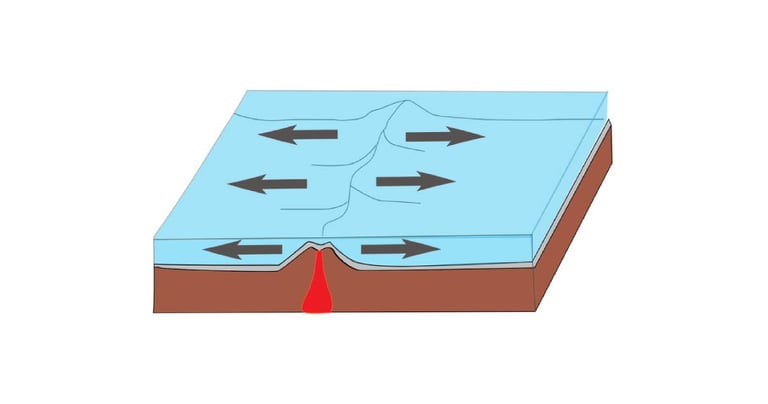
Tectonic Plates (credit: pixabay)
Earth is not a static, solid mass. Rather, it is a dynamic, ever-changing globe whose surface is split into huge fragments called tectonic plates. All that exists from the continents we reside on to the mountains that peak the sky is shaped by these plates, which move slowly but steadily. Although you might be somewhat aware of mountains, volcanoes, as well as earthquakes, are you aware of the true causes of these natural occurrences? This blog post article will reveal 11 remarkable facts with regard to tectonic plates that show how they affect life on Earth in unexpected ways.
Tectonic Plates Are Not Solid Objects: To begin with, contrary to popular belief, tectonic plates are not solid, immovable slabs. Rather, they are composed of stiff, broken fragments of the lithosphere, the outermost layer of Earth, floating over the asthenosphere, which is semi-fluid. Envision a big, stiff puzzle with tiny pieces that move gradually. These "floating" landmasses are constantly in motion and occasionally collide, split apart, or slide past one another.
Tectonic Plates Are Responsible for Earthquakes: Earthquakes are among the most striking consequences of tectonic plate movement. Friction accumulates and is ultimately let loose as seismic energy whenever two plates rub against one another, either by sliding past, pulling apart, or colliding. The ground beneath our feet is shaken by that. Seismic activity is a widespread, and frequently catastrophic, occurrence in regions like the Pacific Ring of Fire because of the tremendous plate movement.
Tectonic Plates Are Constantly Moving: Tectonic plates are always moving, however very slowly, and you most likely are not aware of it. They only travel 2 to 5 centimeters annually on average. Even though that might not appear like much, it accumulates to significant adjustments to the terrain over millions of years. Continents, ocean basins, as well as volcanic activity are all the result of this constant shifting.
Tectonic Plates Move at Different Speeds: The speed at which tectonic plates move varies greatly. For instance, the Eurasian Plate crawls along at barely 2-3 centimeters per year, whereas the Pacific Plate moves at a rate of about 7–11 cm per year. These movements ultimately lead to the formation and breakdown of landforms on Earth, regardless of the variations in pace. It resembles witnessing a slow-motion race in which participants are continuously changing the course underneath them.
Tectonic Plate Boundaries Can Be Active For Millions of Years: For millions of years, certain tectonic plate borders have been active. For example, consider the border between Asia and India. For more than 50 million years, this border has been shifting and merging, creating the majestic Himalayas, the world's highest mountain range. Mountains continue to grow as a result of this activity, which is an excellent illustration of how plate boundaries continue to be active over extremely long periods of time.
Tectonic Plates Can “Subduct” Into The Mantle: Subduction is a mechanism by which one plate slides beneath the other at intersecting borders, when plates collide. Oceanic plates are put back into the Earth's mantle in this manner. For instance, the Pacific Plate is subducting beneath the North American Plate, causing volcanic activity in places like the Cascade Range. Earthquakes and volcanic eruptions are also largely caused by the energy from subduction zones.
Tectonic Plates Can Also Create Trenches: A deep trench in the water is created whenever one tectonic plate is pushed beneath another. The Pacific Plate subducting beneath the smaller Mariana Plate developed the Mariana Trench, the deepest region of Earth's seas, which is situated in the western Pacific Ocean. Given the slow, unrelenting shifting of tectonic plates, picture a huge undersea canyon that is deeper than Mount Everest.
Tectonic Plates Movement Helps Regulate Earth's Climate: Plate tectonics contribute a crucial part in maintaining Earth's long-term climate. By impacting volcanic activity and the carbon cycle, plate movements influence the concentration of carbon dioxide in the atmosphere. CO₂ released by volcanic eruptions has the potential to either warm or cool the earth. For millions of years, Earth's temperature has been influenced by the delicate balance between tectonic plate movements and climate.
Tectonic Plates Can Lead to Mountain Formation: Mountain ranges are among the most amazing outcomes of tectonic plate movement. The Earth's crust is folded and compressed into tall mountains whenever two plates clash and press against one another. For instance, the Indian and Eurasian plates collided to create the Himalayas, which continue to rise presently. Accordingly, you may witness the force of tectonic plates in operation whenever you look at the highest peaks in the world.
Tectonic Plates Can Affect Earth's Magnetic Field: In addition to forming Earth's landscapes, tectonic plates have an impact on the planet's magnetic field. The trajectory of the Earth's magnetic field is recorded as fresh oceanic crust emerges at divergent borders. As a result, the seabed eventually develops magnetic stripes that reveal important details regarding the movement of tectonic plates. Additionally, these patterns of magnetic activity provide information about the evolution of continents and plate tectonics.
Tectonic Plates Can Cause Volcanic Island Chains: Are you familiar with the Hawaiian Islands? Tectonic plates shifting over an unchanging hotspot in the Earth's mantle created these islands. Throughout time, islands were formed by volcanic eruptions as the Pacific Plate shifted across this hotspot. A series of volcanic islands is created as the plate keeps on moving, eroding the more ancient islands and forming new ones. Hawaii continues to expand because the process continues to progress.
Summary: The Dynamism Dancing of Tectonic Plates
Tectonic plates are the unseen powers that are always working beneath our feet, causing anything from earthquakes that rock our starting point to volcanoes that form new landmasses. These gigantic pieces of Earth's lithosphere transform the planet in striking and breathtaking ways, whether they are restructuring continents, developing mountains, or sinking into the mantle. We can better appreciate the constantly evolving, always shifting nature of our world by learning about the movement and interactions of tectonic plates. It is more than simply a geological process; it serves as an ongoing awareness of the forces that have shaped and still shape our globe. The following time you see a magnificent mountain range or experience the ground shaking, keep in mind that the Earth is living, shifting, and continuously changing because of the tectonic plates' slow but forceful shifting motions.
